Wireless EEG Systems: High-Density, AI-Powered Brain Monitoring

All Categories

Professional Wireless EEG Systems for Hospitals and Research Centers with High-Density Neural Signal Acquisition

The rapid advancement of neurotechnology has significantly accelerated the adoption of Wireless EEG systems across hospitals, neuroscience laboratories, and clinical research institutions. Compared with traditional wired electroencephalography equipment, Wireless EEG platforms provide greater flexibility, mobility, and patient comfort while maintaining clinical-grade signal quality. Modern Wireless EEG devices integrate high-density channel configurations, ultra-high sampling rates, and advanced wireless transmission technologies such as Bluetooth and Wi-Fi. These capabilities enable continuous and stable neural signal acquisition even when subjects are moving or performing natural tasks.
Get A Quote

Wireless EEG

For healthcare providers, neuroscience laboratories, and medical equipment distributors, adopting Wireless EEG systems offers multiple operational and clinical advantages. Unlike conventional wired EEG equipment, Wireless EEG solutions provide enhanced mobility, simplified patient preparation, and improved recording reliability in real-world environments. Modern Wireless EEG devices combine advanced signal acquisition hardware with wireless data transmission and intelligent processing technologies. These innovations enable neurologists and researchers to capture high-quality brain activity data without restricting patient movement. In addition, Wireless EEG platforms can integrate multimodal physiological signals and AI-driven analysis tools, significantly improving diagnostic efficiency and research capabilities.

High-Fidelity Signal Acquisition Ensures Clinical-Grade Wireless EEG Performance

A professional Wireless EEG system incorporates advanced amplifiers, high-density channel configurations, and ultra-high sampling rates to ensure accurate neural signal acquisition. Many modern Wireless EEG platforms support up to 128 or 256 channels, enabling comprehensive brain coverage and improved spatial resolution. In addition, wide hardware bandwidth allows Wireless EEG devices to capture both slow cortical potentials and high-frequency oscillations associated with neurological disorders such as epilepsy. Advanced shielding technologies and intelligent filtering algorithms further minimize electromagnetic interference. As a result, Wireless EEG systems can deliver signal quality comparable to traditional laboratory EEG equipment while offering far greater flexibility in clinical and research environments.

Wireless Mobility Enables Naturalistic Brain Activity Monitoring

One of the most significant benefits of Wireless EEG technology is the ability to monitor neural activity without restricting subject movement. Unlike wired systems that require subjects to remain stationary, Wireless EEG devices utilize Bluetooth or Wi-Fi transmission to send data to monitoring workstations in real time. This mobility allows clinicians and researchers to record brain activity during natural behaviors such as walking, interacting, or sleeping. As a result, Wireless EEG recordings often provide more realistic neurological data compared with conventional laboratory EEG tests. For clinical diagnostics, this capability improves the detection of intermittent neurological events that may not appear during short stationary recordings.

AI-Enhanced Analysis Improves Efficiency of Wireless EEG Diagnostics

Modern Wireless EEG systems integrate artificial intelligence and machine learning algorithms to process large volumes of neural data efficiently. These intelligent software tools can automatically detect epileptic spikes, seizure activity, and abnormal brain rhythms in real time. By reducing manual data review time, AI-driven Wireless EEG analysis significantly improves clinical workflow efficiency. In addition, advanced artifact removal algorithms help eliminate noise caused by eye movement, muscle activity, or environmental interference. The combination of high-quality hardware and intelligent analysis capabilities makes Wireless EEG a powerful diagnostic tool for modern neurological healthcare.

Related Products

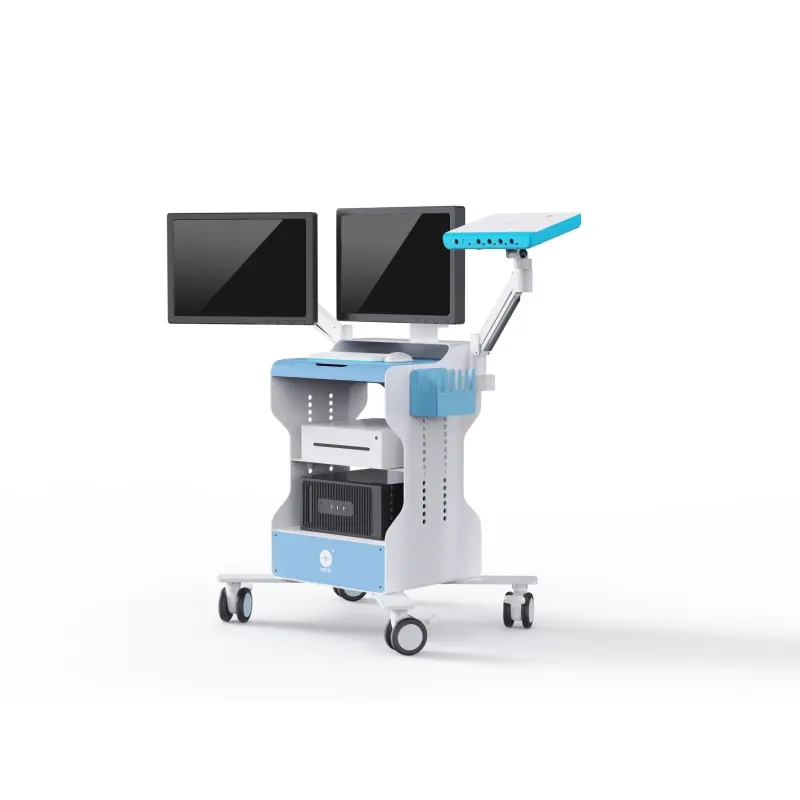
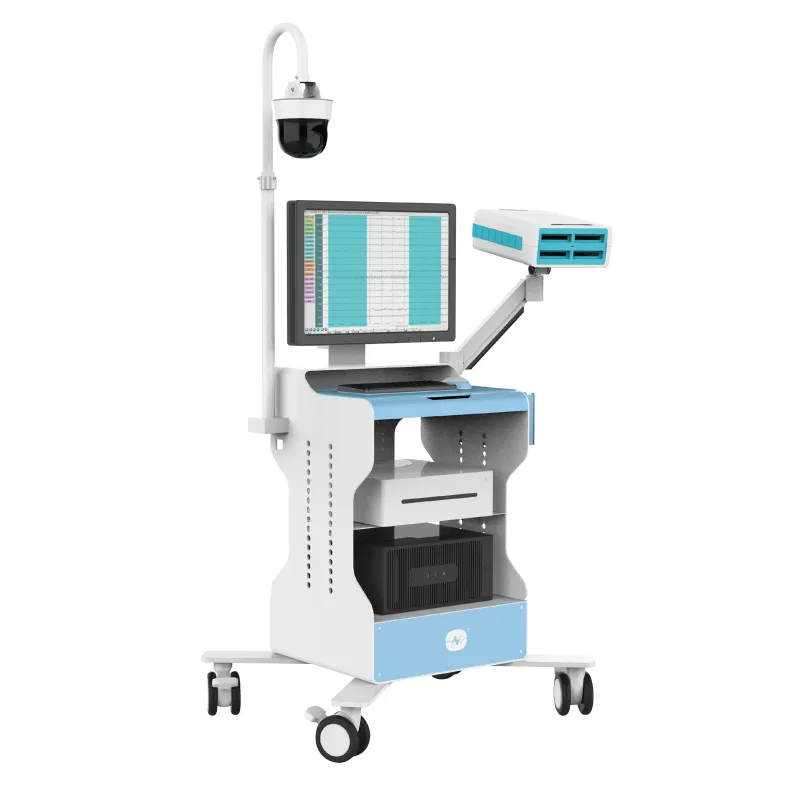
A modern Wireless EEG system is designed to provide reliable and high-precision brain activity monitoring without the limitations of traditional wired EEG equipment. At the core of the Wireless EEG device is a high-performance signal acquisition module capable of supporting high-density EEG channels and ultra-high sampling rates. This ensures accurate capture of both low-frequency and high-frequency neural signals. The hardware architecture of Wireless EEG platforms typically includes lightweight headboxes, modular amplifier units, and integrated wireless communication modules. These components enable continuous neural signal transmission through Bluetooth or Wi-Fi networks while patients remain comfortable and mobile.

About NCC MEDICAL GROUP

NCC MEDICAL GROUP is a globally recognized manufacturer dedicated to the development of advanced neuro-diagnostic and neuro-monitoring technologies. Since its establishment in 1997, the company has continuously focused on innovation in neurophysiology equipment, providing hospitals, research institutions, and medical distributors with high-performance diagnostic solutions.

NCC is officially recognized as a National “Little Giant” enterprise under the SRDI program, a prestigious designation granted to companies demonstrating excellence in Specialized, Refined, Differential, and Innovative technological capabilities. This recognition reflects NCC’s strong commitment to independent research, intellectual property development, and advanced medical device engineering.

The company’s core research and manufacturing operations are located in Shanghai, China. This facility serves as the technological powerhouse of NCC, where multidisciplinary engineering teams conduct research in neurophysiology instrumentation, embedded electronics, signal processing algorithms, and medical software development. Advanced production lines ensure precision assembly and strict quality control for every medical device manufactured.

To strengthen global regulatory compliance and international service coordination, NCC has established its quality and global operations hub in Singapore. This strategic structure allows the company to efficiently manage international certifications, global logistics, and overseas customer support.

NCC’s expertise covers several major areas of neurophysiology technology, including intraoperative neuromonitoring (IONM), electroencephalography (EEG/PSG), electromyography (EMG), and a wide range of specialized medical consumables. Through continuous technological development, NCC has introduced innovative solutions that support safer surgeries, accurate neurological diagnosis, and advanced neuroscience research.

Today, NCC’s medical technologies are used in more than 50 countries and are installed in over 5,000 hospitals across China. The company’s products are trusted by major teaching hospitals, neurological research centers, and regional healthcare institutions across Asia, Europe, Australia, the Americas, and Africa.

Beyond product manufacturing, NCC places strong emphasis on education and professional collaboration. The company operates 31 training and technical support centers across China, providing clinicians and biomedical engineers with practical training programs on EEG, EMG, and intraoperative monitoring technologies.

Through the NCC Innovation Academy, healthcare professionals worldwide can participate in advanced training courses, academic exchanges, and collaborative research programs. This initiative supports continuous professional development while promoting the adoption of advanced neurophysiology technologies.

Guided by its mission of safeguarding life and health, NCC MEDICAL GROUP continues to expand its global presence while advancing innovative solutions that improve neurological diagnostics and patient care worldwide.

FAQ

What are the main advantages of Wireless EEG compared with traditional EEG systems?

The primary advantage of Wireless EEG lies in its ability to record brain activity without restricting patient movement. Traditional EEG systems rely on wired connections between electrodes and recording equipment, which limits mobility and may affect natural behavior. In contrast, Wireless EEG systems use Bluetooth or Wi-Fi transmission to send data to monitoring workstations in real time. This design allows patients or research participants to move freely during EEG recording, enabling more natural brain activity observation. Additionally, modern Wireless EEG platforms incorporate advanced signal processing algorithms and high-density electrode arrays, ensuring data quality comparable to laboratory-based EEG equipment.
Yes, modern Wireless EEG systems are engineered to achieve signal quality comparable to traditional wired EEG equipment. High-performance amplifiers, low-noise circuit design, and advanced digital filtering technologies ensure accurate neural signal acquisition. Furthermore, Wireless EEG platforms typically integrate real-time impedance monitoring and intelligent artifact removal algorithms. These technologies help maintain signal stability and reduce interference from environmental noise or body movement.
A wide range of healthcare institutions benefit from implementing Wireless EEG technology. Neurology departments use Wireless EEG systems for epilepsy diagnosis and long-term brain monitoring. Sleep research laboratories rely on Wireless EEG to study sleep patterns in natural environments. Additionally, rehabilitation centers, brain-computer interface research labs, and telemedicine providers increasingly adopt Wireless EEG systems due to their portability and flexible monitoring capabilities.

More Posts

Technical Standards and OEM Customization Services of Intraoperative Nerve Stimulators for Surgical Precision

05

Mar

Technical Standards and OEM Customization Services of Intraoperative Nerve Stimulators for Surgical Precision

In modern surgery, precision is no longer defined solely by the surgeon’s hand. It is increasingly defined by the reliability of the technologies guiding that hand. The nerve stimulator intraoperative has evolved from an auxiliary device into a...
View More
Regulatory Compliance and Application Value of Surgical Probe in Precision Surgery

05

Mar

Regulatory Compliance and Application Value of Surgical Probe in Precision Surgery

In precision surgery, few instruments appear as simple—and are as technically underestimated—as the surgical probe. It has no moving joints, no power source, no digital interface. Yet in neurosurgery and other microsurgical disciplines, t...
View More
Technical Features and Compliance Procurement Strategies for Concentric EMG Needles

05

Mar

Technical Features and Compliance Procurement Strategies for Concentric EMG Needles

Concentric EMG needle electrodes are among the most frequently used consumables in clinical neurophysiology, yet they are often underestimated in technical complexity. In routine electromyography, the difference between a clean motor unit potential a...
View More
Compliance and Technical Advantages of Portable EEG Machines: Empowering Efficient Clinical Neuro Monitoring in Healthcare Institutions

05

Mar

Compliance and Technical Advantages of Portable EEG Machines: Empowering Efficient Clinical Neuro Monitoring in Healthcare Institutions

The true value of an eeg machine portable solution is not measured by how small it is, but by how reliably it performs when removed from the controlled environment of a neurophysiology laboratory and placed into the complexity of real clinical care. ...
View More

Customer Reviews

Dr. Andrew Collins – Neurology Specialist

Our hospital introduced a Wireless EEG platform last year, and the results have been impressive. The mobility provided by the Wireless EEG system allows patients to move naturally during monitoring sessions, which significantly improves the accuracy of neurological diagnostics.

Dr. Sofia Martinez – Neuroscience Researcher

In our neuroscience laboratory, the Wireless EEG system has become an essential research tool. It allows us to conduct brain activity studies in natural environments without restricting participant movement.

James Robertson – Medical Equipment Distributor

As a distributor, we have supplied Wireless EEG systems to multiple hospitals and research institutes. Feedback from clinicians has been extremely positive, especially regarding the portability and signal stability.

Get a Free Quote

Our representative will contact you soon.
Email
Name
Mobile
Your Role
Company Name
Message
0/1000
High-Density Neural Signal Acquisition in Wireless EEG Systems

High-Density Neural Signal Acquisition in Wireless EEG Systems

Modern Wireless EEG devices support high-density electrode configurations, enabling comprehensive brain coverage and improved spatial resolution.
Advanced Wireless Transmission Technology for Continuous EEG Monitoring

Advanced Wireless Transmission Technology for Continuous EEG Monitoring

The Wireless EEG platform utilizes Bluetooth and Wi-Fi communication technologies to ensure stable real-time data transmission.
AI-Driven Data Processing Enhances Wireless EEG Diagnostic Efficiency

AI-Driven Data Processing Enhances Wireless EEG Diagnostic Efficiency

Integrated machine learning algorithms automatically detect abnormal neural patterns, improving the efficiency of Wireless EEG analysis.

Copyright © NCC Medical Co., Ltd.  -  Privacy policy