 EN
EN


Application of Nerve Monitoring During Surgery and Equipment Procurement Guide
For neurosurgery departments and IONM service companies, the core question around nerve monitoring during surgery is rarely whether to implement it; clinical evidence supports its use in high-risk procedures. The harder question is configuration: which modalities to combine, which electrode types to select, and what procurement criteria to apply when evaluating hardware and disposable consumables. This guide addresses both dimensions.
What Nerve Monitoring During Surgery Tracks
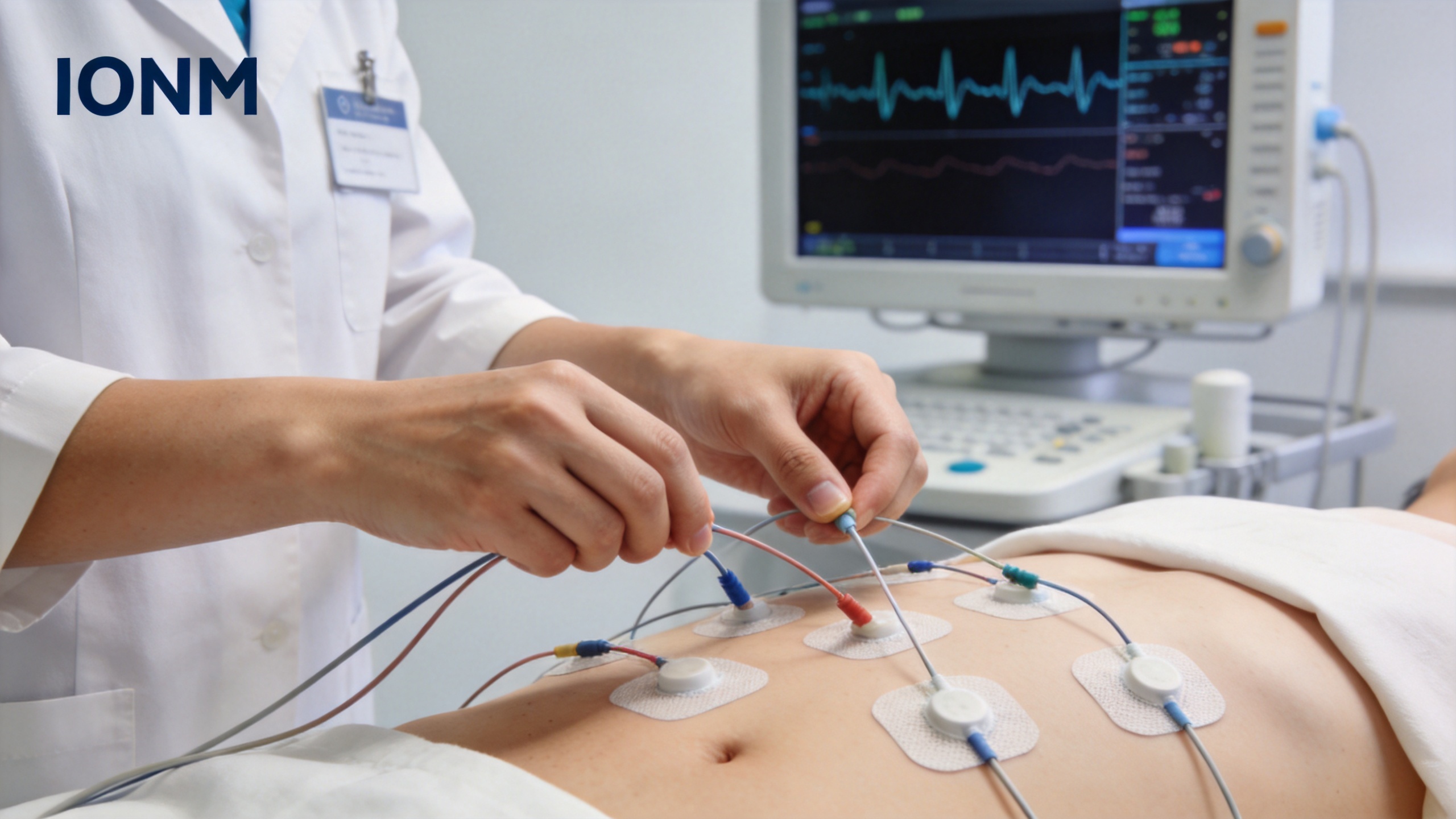
Nerve monitoring during surgery — formally known as intraoperative neurophysiological monitoring (IONM) — uses electrophysiological techniques to track the functional integrity of neural pathways in real time. Four primary modalities are deployed: Somatosensory Evoked Potentials (SSEPs), Motor Evoked Potentials (MEPs), Electromyography (EMG, both free-run and triggered), and Auditory Brainstem Responses (ABR/BAER). In complex procedures, these modalities run together rather than individually.
SSEPs monitor sensory pathway integrity from peripheral nerve through the spinal cord to the cortex, making them the standard choice for spinal deformity corrections and spinal cord tumor resections. MEPs, delivered via transcranial electrical stimulation, assess motor pathway function and are critical wherever motor tract injury risk is elevated, including brain tumor resections near motor cortex and anterior cervical spine surgery. Free-run EMG provides continuous nerve root surveillance, while triggered EMG verifies pedicle screw placement accuracy or tests nerve proximity during dissection.
When configuring nerve monitoring during surgery for a specific procedure, start from the surgical pathway at risk, not the equipment spec sheet. Choosing electrodes based only on impedance figures misses what really matters: how an electrode performs under the actual patient positioning and access constraints of that case. A corkscrew electrode reliable in a supine craniotomy may not hold signal integrity across four to six hours in a prone spinal deformity correction.
Procedures Where IONM Is Applied
Nerve monitoring during surgery is used across neurosurgical, orthopedic, and vascular specialties, including:
- Spinal surgery: Scoliosis correction, cervical and lumbar decompression, spinal cord tumor resection, instrumented fusion
- Brain surgery: Tumor resections near motor or eloquent cortex, brainstem surgery, posterior fossa procedures
- Peripheral nerve surgery: Brachial plexus exploration, nerve repair, nerve tumor excision
- Head and neck surgery: Thyroid and parathyroid procedures (recurrent laryngeal nerve monitoring), parotid surgery (facial nerve monitoring)
- Vascular surgery: Aortic aneurysm repair, carotid endarterectomy
The modalities required, and therefore the electrode types and channel counts, vary significantly across this procedure list. Hospital biomedical engineering teams and IONM service providers regularly underestimate this when establishing a new monitoring program.
Equipment Selection Criteria
Channel Count
Inadequate channel capacity is among the most common equipment planning errors. One IONM service provider operating an 8-channel system through a skull base case found it impossible to simultaneously cover facial nerve EMG, auditory brainstem response, and motor evoked potential monitoring — all three clinically indicated for that procedure. The case required a minimum 16-channel system. For complex multi-modality monitoring, 32 channels is often the practical starting point. Channel count should be specified against the highest-complexity case type in your procedure mix, not an average.
Departments that size channel capacity against worst-case surgical complexity rarely face configuration compromises mid-case.
Amplifier and Electrode Compatibility
The amplifier architecture determines which electrode connector types are compatible with your nerve monitoring during surgery system. Resolving this before finalizing consumable sourcing avoids workflow disruptions — connector mismatches discovered at case setup create avoidable delays. NCC Medical's IONM electrode range at nccmed.com supports compatibility across major amplifier platforms, but verifying connector specifications against your specific system before ordering is standard procurement practice.
Electrode Selection by Modality
Electrode selection for nerve monitoring during surgery is both modality-specific and procedure-specific:
- SSEP: Surface disc electrodes for cortical recording; subdermal needle electrodes at peripheral stimulation sites. Subdermal needles deliver consistent acquisition for most spinal fusion cases, provided trained personnel place them and replace them per-patient for sterility.
- MEP: Corkscrew or spiral electrodes for transcranial stimulation provide reliable scalp anchoring across long procedures. Subdermal needle or surface electrodes serve muscle recording sites.
- Free-run EMG: Paired subdermal needle electrodes in target muscle groups; impedance below 5 kΩ is the generally accepted signal quality threshold.
- ABR/BAER: Surface cup electrodes at standard scalp positions with insert earphones or surface ear electrodes.
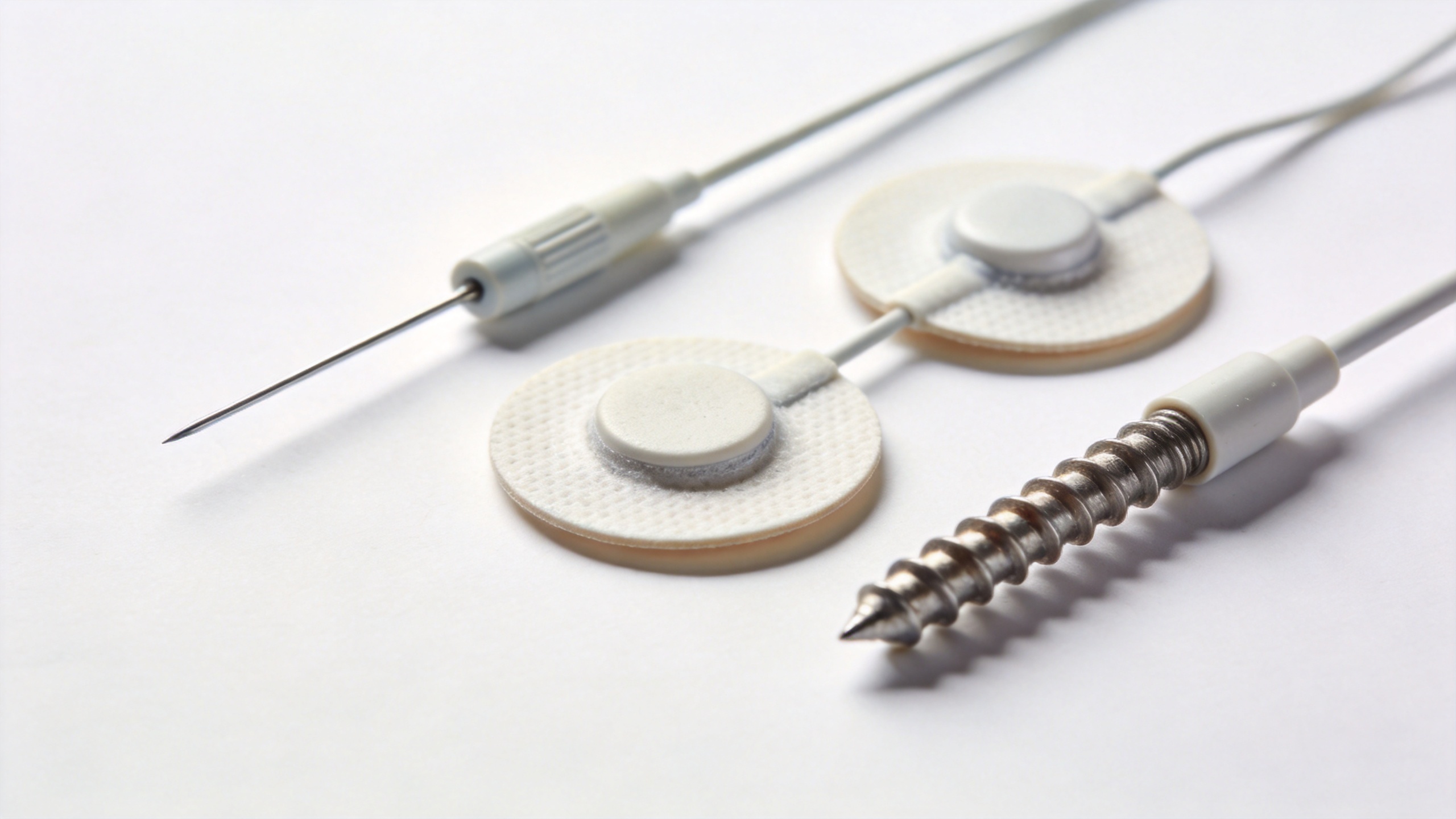
For high-volume IONM consumable procurement, standardizing on single-use disposable electrodes brings two practical benefits: it eliminates reprocessing logistics, and it produces consistent batch-to-batch impedance that reduces patient-to-patient baseline variability. A neuromonitoring technologist setting up before a lumbar decompression will notice that well-designed subdermal needles seat reliably and rarely require re-insertion — that consistency shortens setup and reduces patient discomfort.
Consumable Procurement Criteria
Regulatory Documentation
CE marking under EU MDR (2017/745) is required for European distribution; FDA 510(k) clearance applies for the US market. ISO 13485 certification confirms that the manufacturer's quality system controls production consistency. NCC Medical's disposable IONM electrode line is manufactured under ISO 13485-compliant processes and carries CE marking. Documentation is available for distributor due diligence and hospital procurement review — contact [email protected] to request specification sheets.
Supply Chain Reliability
High-volume IONM programs benefit from a supplier who covers both monitoring hardware and the full consumable range (needle electrodes, surface electrodes, subdermal electrodes, sensors, and lead wires) through a single supply relationship. Managing multiple vendors for different electrode types adds procurement overhead and inventory complexity that compounds quickly at scale.
When a neurosurgery department launches a new nerve monitoring during surgery program, initial attention concentrates on equipment procurement and installation. What often ends up constraining monitoring quality is the human and operational side: whether the technical team has adequate training on multi-modality protocols, and whether the consumable supply chain supports consistent, validated electrode setups across case types. Procurement planning should account for both dimensions from the start.
OEM and Customization Options
For distributors building private-label IONM consumable lines, OEM manufacturing capability matters. Custom lead wire lengths, connector configurations, and labeling allow service companies to match electrodes precisely to their installed amplifier base, reducing cable management issues in the OR.
Procurement Checklist
When evaluating nerve monitoring during surgery equipment and consumables, confirm:
- Channel count covers your highest-complexity procedure requirements
- Electrode types match all modalities you run simultaneously
- Connector specifications are verified against your amplifier platform
- CE, FDA, and ISO 13485 documentation is available from the supplier
- The supplier maintains batch consistency and responsive fulfillment for your volume
- Application support and technical training are included in the supply relationship
For electrode specification consultation or product documentation requests, NCC Medical supports hospital biomedical teams, IONM service companies, and distributors globally. Contact the international team at [email protected].