
The European Commission has recently released two authoritative research reports: the 20th Notified Body (NB) Survey Report (data cutoff: 28 February 2026) and the 3rd Economic Operator (EO) Survey Report (data cutoff: 31 October 2025). The documents fully unveil the industry landscape five years after the entry into force of the MDR: while certification demands keep surging, protracted review timelines and skyrocketing compliance expenses have fueled an ongoing wave of product withdrawals across the sector. Leveraging its dual MDR CE certification framework covering the Shanghai headquarters and wholly-owned Singapore subsidiary, NCC effectively mitigates industry-wide compliance risks and delivers consistent, reliable services to global clients across the EU.
Industry-Wide Pressures: Lengthy Certification Timelines & Soaring Costs Lead Nearly Half of Manufacturers to Cut EU Product Lines
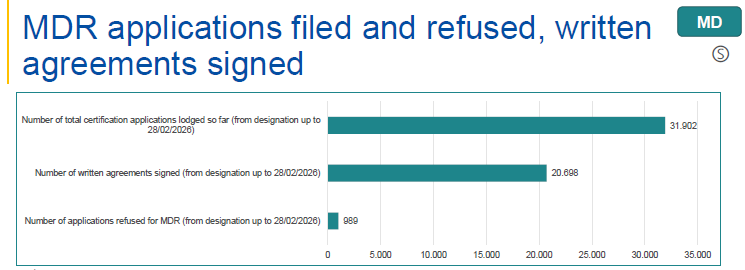
Data from Notified Bodies reveals a steady uptick in global MDR certification applications. A total of 31,902 certification requests have been submitted across all channels, with 20,698 formal contracts signed between manufacturers and Notified Bodies, alongside 989 rejected applications.
1. Certification Timelines Generally Exceed One Year
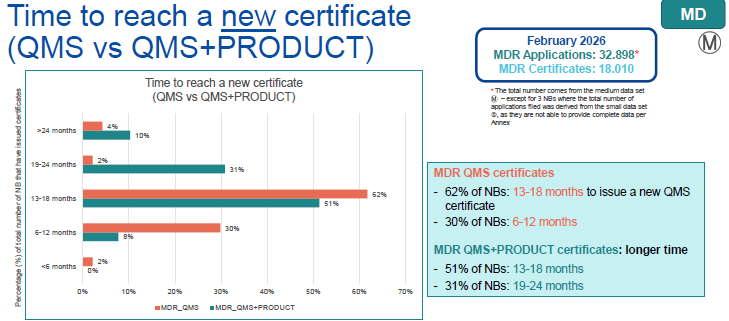
Prolonged review cycles represent a universal pain point for the entire industry. 62% of Notified Bodies state that MDR quality management system certification takes 13 to 18 months to complete, while merely 30% can issue certificates within 6 to 12 months. For integrated audits covering both quality systems and medical device products, 51% of Notified Bodies require 13–18 months for review, and an additional 31% take 19–24 months. High-risk, structurally complex implantable devices routinely face certification timelines longer than 18 months.
2. Disproportionate Costs Spark Large-Scale Market Withdrawals
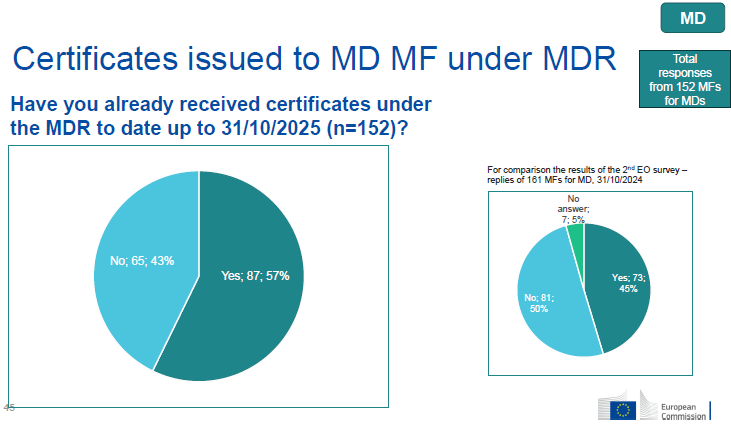
As of October 2025, among surveyed manufacturers, only 57% have successfully obtained MDR certificates, whereas 43% remain under review or have not yet filed applications. 48% of interviewed medical device manufacturers have removed certain product lines from the EU market, with 63% citing certification expenses exceeding product revenue as the primary withdrawal driver. Medical consumables, implantable devices, and reusable surgical instruments bear the brunt of the regulatory impact, with niche devices accounting for a mere 7% of withdrawn products. Clinical evaluation for Class III devices can cost up to €300,000; the average initial product certification fee stands at nearly €200,000, paired with annual maintenance costs of approximately €22,000. Additionally, 44% of manufacturers spend 6 to 12 months compiling technical documentation for regulatory submissions.
3. Looming Recertification Pressures
The first batch of MDR certificates will expire en masse between 2026 and 2029. Manufacturers must kick off recertification preparations six to twelve months in advance, translating to sustained growth in compliance expenditures.
Forward-Thinking Dual-Base Strategy: NCC’s Dual-Entity CE Credentials Navigate Full MDR Compliance Cycles
No transitional grace periods remain under the current MDR regulatory framework. Compliance capability is no longer merely a market access threshold for the EU; it has evolved into a core competitive moat for medical device enterprises pursuing global expansion. Numerous industry peers have exited the European market due to single-entity certification, fragmented product portfolios and inadequate compliance systems, resulting in tightened overseas procurement channels. Suppliers holding stable multi-jurisdictional compliance certificates and operating diversified manufacturing bases will retain lasting market advantages.
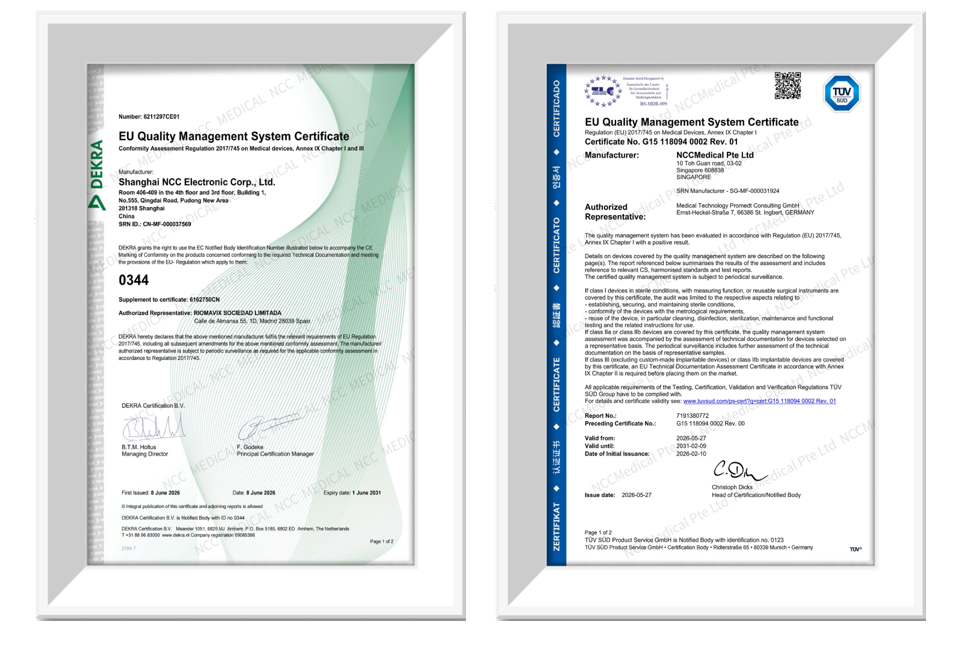
NCC previously issued an official press release announcing that its Shanghai headquarters and wholly-owned Singapore subsidiary have each secured independent MDR CE product certificates. Against the backdrop of ongoing EU industry reshuffling, the strategic value of this dual-region compliance layout has become fully apparent. Unlike most market players that adopt short-sighted single-site, single-entity compliance setups, NCC has built a dual-layer compliance safeguard system centered on long-term global operational development.
Moving forward, NCC will continue to leverage its domestic R&D and manufacturing hub in China and overseas compliance platform in Singapore. Supported by stringent quality control standards and end-to-end full-spectrum compliance expertise, the company will supply stable, regulatory-compliant, cost-effective medical devices to partners across the world. NCC will further penetrate global overseas markets by harnessing the robust manufacturing strength of Chinese intelligent manufacturing.

Copyright © NCC Medical Co., Ltd. - Privacy policy
 EN
EN